

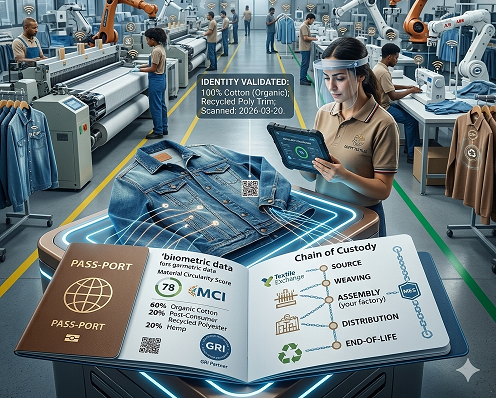
The Digital Product Passport: Why Your Next Product Will Have Its Own "Identity Document"
The way we produce and consume is about to undergo a digital revolution. As part of the Eco-design for Sustainable Product Regulation (ESPR), the European Union is introducing the Digital Product Passport (DPP)—a tool designed to electronically register, process, and share vital product-related information across the entire supply chain.
But what does this actually mean for businesses and consumers? Here is a breakdown of why the DPP is the next big thing in global trade and sustainability.
More Than Just a QR Code
The DPP is a framework for transparency. It is intended to reduce the negative life cycle impacts of products while fostering a level playing field for sustainable goods in the internal market. Unlike a simple static label, the DPP provides a dynamic set of data specific to a product model, batch, or even an individual item.
To access this data, users—including consumers, repairers, and recyclers—will simply scan a data carrier, such as a QR code or watermark, located on the product, its packaging, or accompanying documentation.
What’s Inside the Passport?
The passport isn’t just about "green" claims; it is a deep dive into the product's DNA. According to the current framework, a DPP may include:
- Unique Identifiers: Including unique product, operator, and facility identifiers to ensure full traceability.
- Sustainability Data: Detailed information on substances of concern and the performance of the product relative to eco-design parameters.
- Circular Economy Tools: Instructions for disassembly, recycling, and end-of-life disposal for treatment facilities, as well as maintenance and repair guides for consumers.
- Compliance Documentation: Essential documents like the EU declaration of conformity and technical certificates.
Built on Open Standards
The technical architecture of the DPP system is designed to be fully interoperable. It relies on open standards and machine-readable, searchable formats to ensure that information flows seamlessly between different actors.
While the data system itself will be decentralized and maintained by economic actors, the Commission will manage a central registry to store a record of all unique identifiers. To protect business interests, the system will allow differentiated access rights, ensuring that sensitive intellectual property is protected while providing essential transparency to authorities and the public.
Supporting the Entire Ecosystem
The EU recognizes that this transition may be challenging, particularly for SMEs. To bridge the "digital divide," the regulation anticipates the rise of DPP-as-a-Service providers—intermediaries that offer low-cost data storage and management. These providers will be strictly regulated to ensure they do not misuse or sell the data they handle.
As we move toward a world where "sustainable" is the default, the DPP will be the key that unlocks a truly circular economy
As we move toward a world where "sustainable" is the default, the DPP will be the key that unlocks a truly circular economy
-
Circular economy,
Digital Product Passport (DPP)